

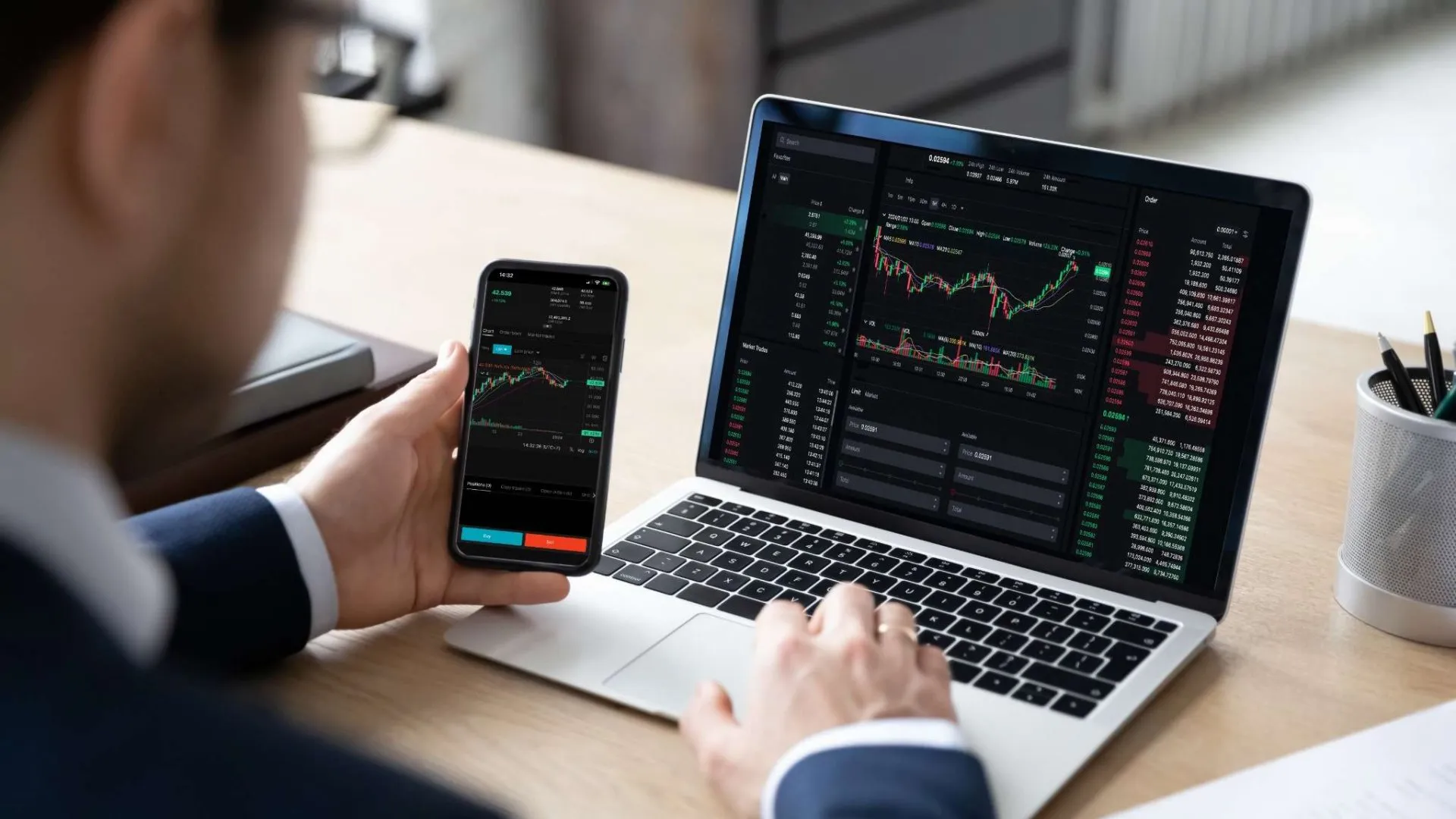
Leverage is perhaps the most fascinating tool used by traders in forex and prop trading. With it, one can command much bigger positions with just a fraction of their trading account balance. Although leverage may be great for maximizing profits, the problem is that it can multiply your loss too. A lot of beginner traders sign up for funded trading programs hoping that with the use of leverage, they will be able to get big quick. But one of the primary reasons traders do poorly in their prop firm evaluation process is overleveraging.
Discover the hidden risks of overleveraged trading and learn to use leverage responsibly.
Leverage in Trading Definition
Let us first consider what leverage means before moving further into its potential risks.
Leverage provides traders with the opportunity to borrow money from brokers or proprietary trading companies to increase the size of their trades. For instance, using a 1:100 leverage ratio, a trader will be able to manage a position worth $100,000 while investing only $1,000 out of their pocket.
The leverage effect is common in forex trading since the value changes of currency pairs tend to be rather limited. While increased leverage may enhance the chances of making more profits, at the same time, there is a high risk of incurring significant losses.
When asking themselves what is leverage in trading, many people tend to consider only the upside possibilities and overlook the associated risks.
Why Do Prop Firms Give High Leverage?
High leverage is given by most prop firms to traders since it creates more room for trading strategies. Some prop firms give traders a leverage of up to 1:50, 1:100, or 1:500.
The purpose is to ensure that traders can take advantage of all the available opportunities in the market. It does not mean that prop firms want traders to take unnecessary risks. Prop firms require traders to manage their risks and make sure that they do not use the leverage irresponsibly.
In a funded account, traders are required to adhere to daily drawdown limitations and maximum loss limitations.
The Unseen Dangers of Overleveraging
1. Small Moves Turn into Big Moves
The first and foremost problem with overleveraging is that even small market moves could lead to big losses.
For instance, if the trader leverages to an extreme extent, just a 1% market move could wipe off a substantial amount from his account balance.
Most traders who operate in a funded trading account find it difficult to succeed since they risk too much on one trade. They believe that the market will move in their favor, but volatility takes over their account in no time.
2. Emotional Trading Rises
Overleveraging leads to emotional trading. When too much capital is at stake, traders tend to feel emotional even in a normally fluctuating market.
This could include:
- Revenge trading
- Exits from trades too soon
- Shifting of stop losses
- Disregarding a trading plan
- Poor entry in the market
Successful funded traders have self-control over their emotions. Overleveraging makes that very difficult.
3. Breaking Prop Firm Regulations
Each prop firm has strict regulations aimed at protecting capital. These generally include:
- Limits on daily drawdowns
- Overall maximum loss limits
- Risk management requirements
In case traders apply excessive leverage to their trading accounts, they can break these regulations after only one or two losing trades. The trading system itself could be highly profitable; however, incorrect leverage management could force an early stop of the challenge.
The majority of losing cases do not involve bad trading strategies, but rather too large a percentage of risked capital on each trade.
4. Margins and Forced Closures
Using high leverage results in higher margins required by brokers and prop firms. In case the market moves against the trader, their positions can be closed automatically.
This process is called a margin call or forced closure.
It should be understood that traders do not actually manage to hold and recover from this situation, as their positions leave little room for price fluctuations.
5. Extra Trading Costs
As traders increase leverage, they tend to open bigger positions more often. It results in extra trading costs such as:
- Spread charges
- Commission charges
- Swap fees
The Reasons for Overleveraging Among Beginners
There are several reasons why new traders do not know how to use leverage in trading properly, but instead consider it a way to become rich fast. The main ones are as follows:
No Experience
Beginners may be unaware of market volatility and risk management.
Greed
Some traders think about big gains while not considering possible losses.
Influence of Social Media
Trading-related material on social media creates illusions about life and quick profits for beginners.
Ways to Fast-Pass Prop Firm Evaluations
Traders try to get past the prop firm evaluation process in a short amount of time.
Effects of Overleveraging on Long-Term Performance
Funded trading is not for those looking to make big money in no time at all. Prop shops like traders that generate steady and reliable income.
The effects of overleveraging on long-term performance include:
- Generating unreliable results
- Causing emotional errors
- Causing blowups
- Preventing good trading discipline
For example, a trader who makes 20% one day and loses their entire account in the following week cannot be considered successful.
Wise Leveraging Strategies
1. Risk Only a Small Percentage of Your Capital Per Trade
Professional traders risk only 1% or less per trade. It helps to protect your account from losing streaks.
2. Employ Stop Losses
Stop losses will enable you to manage risks effectively and avoid making any emotionally driven decisions.
An appropriate stop loss would ensure that no single trade is capable of blowing up your account.
3. Emphasize Consistency
Slowly passing the challenge at a prop firm is preferred to quickly failing it. Gradual success breeds consistency and profits.
4. Do Not Place Any Trades During High Market Volatility
Important announcements can lead to volatile markets. Placing high leverage trades when markets are highly volatile is very risky.
5. Learn About Position Sizing
It is arguably the most important skill in trading. Lot size calculations are better than placing arbitrary trades.
The Connection Between Leverage and Psychology
It becomes difficult for a trader's psychology when the level of leverage is too high. Fear and greed will be amplified because the amount at stake is higher.
Traders know that capital preservation is the number one priority for them. They don't rely on good fortune or excessively large positions.
A disciplined trader operating with moderate levels of leverage will outperform a reckless trader aiming for outsized returns.
Creating a Long-Term Funded Trading Career
If you want to succeed as a funded trader, you need to concentrate on:
- Patience
- Risk management
- Self-control
- Consistency
- Strategy formulation
Your funded trading account must be viewed as your professional business account, not some form of gambling.
While learning about leverage in trading is easy, mastering the art of when not to use it is challenging.
Conclusion
When used wisely, leverage can be an incredibly useful strategy in your trading activity, yet overusing leverage is a hidden trap that breaks down many funded traders. The higher the level of your leverage, the higher both your chances of gaining profit and suffering losses and additional stress.
A profitable trader should know that survival is better than making fast money. Rather than trying to make unrealistic money, a trader has to concentrate on consistency and correct trading.
If you know how to leverage in trading and use it wisely, you will keep your funded trading account safe.
